
Book Review – How to Know a Person
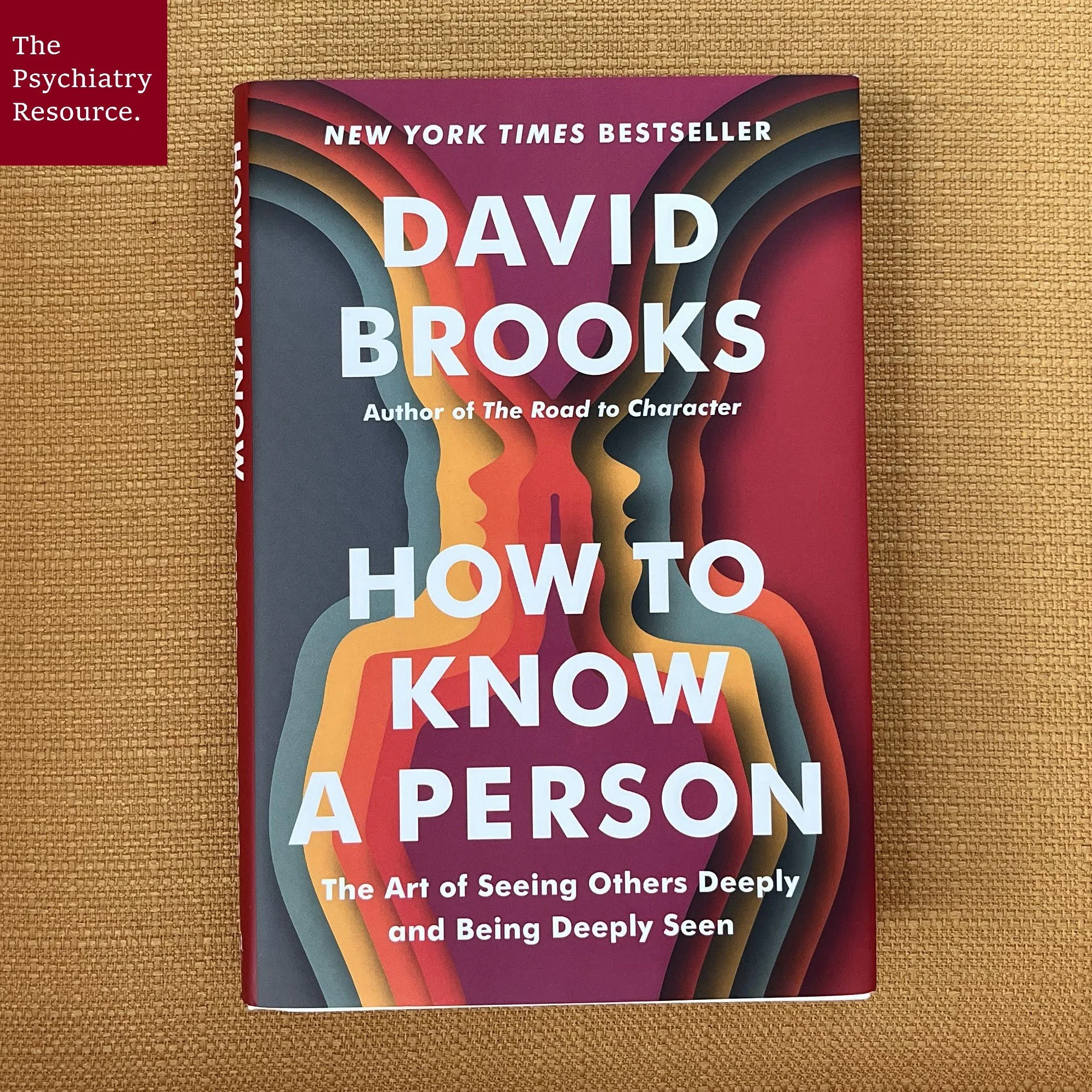
Image: How to Know a Person by Len Lantz (CC BY-NC-ND)
Synopsis: Len's Star Rating: 9 out of 10. An excellent book on how to better connect with and understand the people around you.
BY LEN LANTZ, MD / 4.3.2026; No. 140
Disclaimer: Yes, I am a physician, but I’m not your doctor, and this article does not create a doctor-patient relationship. This article is for educational purposes and should not be seen as medical advice. You should consult with your physician before you rely on this information. This post also contains affiliate links. Please click this LINK for the full disclaimer.
Star Rating – 9 out of 10
Rating guide: 1 = horrible, 5 = average and 10 = wow
Author
David Brooks
About the author
David Brooks is an award-winning columnist for The New York Times (2003-2026) and The Atlantic, a television commentator, a bestselling author, and a presidential senior fellow at Yale University’s Jackson School of Global Affairs. He earned a BA in history from the University of Chicago. He is best known as a moderate conservative or centrist voice in the US, and he has received over 30 honorary degrees for his prolific intellectual contributions to moral philosophy, sociology, and higher education. In 2018, David Brooks founded Weave: The Social Fabric Project at the Aspen Institute to address “the problem of broken social trust that has left Americans divided, lonely, and in social gridlock.”
General description
How to Know a Person is a book about connecting with others in a deeper, more authentic, and lasting way—a way that really matters to you and the other person. Author David Brooks argues that most people are eager to share about themselves with others who are genuine and trustworthy. In this book, the author conveys stories, strategies, guidelines, and examples of how you can connect with others, from strangers to the most important people in your life. He also shares his missteps and efforts at personal growth in a way that shows that it is possible to connect with others and be seen, heard, and understood as you convey those feelings to the people around you. Topics covered in this book are categorized into three sections:
I See You
I See You in Your Struggles
I See You with Your Strengths
Unique and most important aspects
How to Know a Person shares the insights and strategies gleaned by author David Brooks in his own journey of meaningful connection with others. In addition to sharing personal stories, the author draws on history, research, psychology, and the experiences of others as he explains how you can engage the people around you in a world that is growing more detached.
On a side note, this book was given to me by one of my best friends, a fellow pediatric psychiatrist. We both desire to be what David Brooks calls Illuminators. While I have developed strong interpersonal skills over time, I still found many helpful ideas and approaches in this book. Important concepts of this book include:
The concept of Diminishers and Illuminators
The experience of “beholding someone”
The “tricks” of a Diminisher
The characteristics of an Illuminator
The qualities of accompaniment
The theoretical framework of constructionism
Ways to become a better conversationalist
Steps to take when having a hard conversation
The idea that great people often have a “sacred flaw”
The empathy spectrum, practices to develop empathy, and three skills related to empathy:
Mirroring
Mentalizing
Caring
Paradigmatic and narrative modes of thinking
Best quotes
“Human beings need recognition as much as they need food and water. No crueler punishment can be devised than to not see someone, to render them unimportant or invisible.”
“Diminishers make people feel small and unseen. They see other people as things to be used, not as persons to be befriended.”
“Illuminators, on the other hand, have a persistent curiosity about other people. They have been trained or have trained themselves in the craft of understanding others.”
“When you’re beholding someone, you’re seeing the richness of this particular human consciousness, the full symphony—how they perceive and create their life.”
“I wish I had followed some advice that is rapidly becoming an adage: Let others voluntarily evolve.”
“People don’t see the world with their eyes; they see it with their entire life.”
“Constructionism is the recognition, backed up by the last half century of brain research, that people don’t passively take in reality. Each person actively constructs their own perception of reality.”
“The essence of evil is the tendency to obliterate the humanity of another.”
“Introspection isn’t the best way to repair your models; communication is.”
“Empathy is involved in every stage of the process of getting to know a person. But it is especially necessary when we are accompanying someone who is wrestling with their wounds.”
“In the Illuminator model, character building is not something you can do alone.”
“But in real life, the research shows, people who are good at thinking are also more likely to be good at feeling.”
“As the saying goes, they are not going to solve their problem at the same level of consciousness at which they created it.”
“By our late twenties or early thirties, most of us have what McAdams calls an imago, an archetype or idealized image of oneself that captures the role that person hopes to play in society.”
Who would enjoy this book?
Readers interested in learning more about connecting meaningfully with others will likely enjoy How to Know a Person.
Who would not enjoy this book?
Readers primarily interested in a comprehensive review of research or a step-by-step guide to social interactions are unlikely to enjoy How to Know a Person.
Conclusion
How to Know a Person is an excellent book on how to better connect with and understand the people around you.